Book Review: Extreme Ownership

I picked up Extreme Ownership by Jocko Willink and Leif Babin expecting a book about discipline, accountability, and military leadership. I found a practical leadership philosophy instead. It applies just as much to boardrooms, operations teams, and cross functional work. This philosophy is as relevant to those areas as it is to the battlefield.
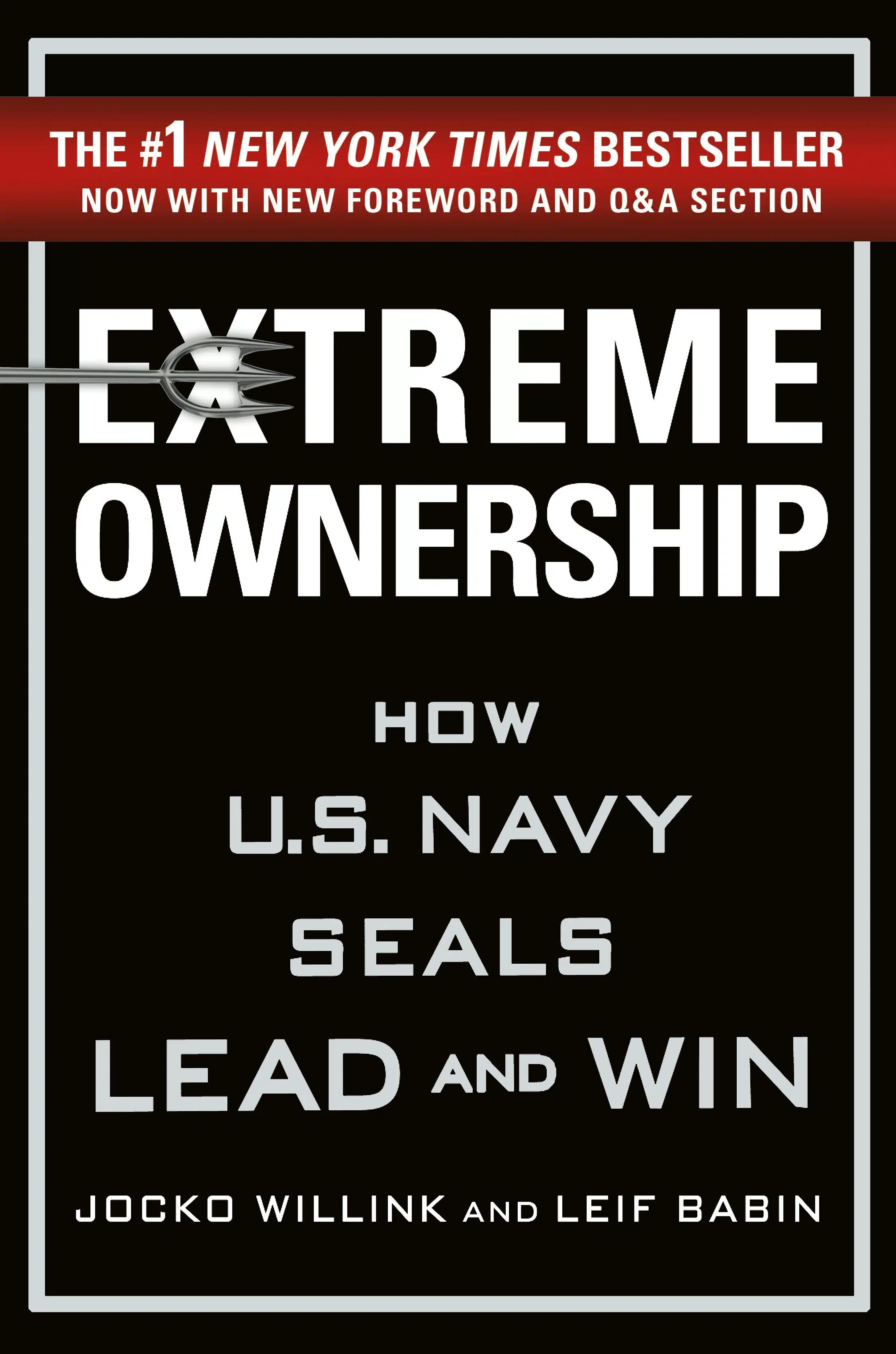
At its core, this book asks leaders to confront a simple but uncomfortable question. Where am I responsible, even when it would be easier to blame circumstances, systems, or other people? One of the most quoted ideas from the book is also the most challenging. It states: “There are no bad teams, only bad leaders.” That statement can feel harsh at first. But read through a leadership lens, it becomes empowering. Extreme ownership does not mean taking blame for everything that goes wrong. It means taking responsibility for the conditions you create as a leader. When leaders own outcomes, they stop waiting for permission to fix problems. They move from explanation to action.

A recurring theme throughout the book is that failure often comes from confusion, not capability. Teams struggle when priorities are unclear or constantly shifting. The authors emphasize that leaders must keep plans simple and ensure everyone understands the why, not just the what. “If the frontline troops do not understand the mission, they cannot execute it.” In business, this shows up when teams are overloaded with initiatives, conflicting metrics, or unclear decision rights. Extreme ownership requires leaders to slow down enough to create clarity so teams can move faster with confidence.

One of the most practical concepts in the book is decentralized command. Leaders should not try to control every decision. Instead, they should empower people closest to the work with the authority to act. This approach only works when leaders have put in the work up front to ensure alignment. When goals, guardrails, and trust are in place, teams can adapt quickly without constant escalation. This resonated deeply for me. Strong leaders are not bottlenecks. They are force multipliers!

Another powerful takeaway is the role of ego in leadership breakdowns. Ego shows up as defensiveness, the need to be right, or resistance to feedback.  “Implementing extreme ownership requires checking your ego and operating with a high degree of humility.” Leadership growth often begins with asking better questions of ourselves. What am I missing? How might my approach be contributing to this outcome? What feedback am I avoiding? Owning results means being willing to look inward before pointing outward.

Although the stories in Extreme Ownership originate from combat, the lessons translate cleanly into modern organizations navigating change, uncertainty, and complexity. Today’s leaders are balancing performance with empathy, speed with sustainability, and accountability with trust. Extreme ownership fits squarely in that tension. This book reminds us that leadership is not about control. It is about responsibility.

What I appreciated most about Extreme Ownership is that it does not offer shortcuts. It offers standards. Taking ownership is not always comfortable. It requires self awareness, consistency, and courage. But it also creates stronger teams, clearer outcomes, and leaders who are respected rather than feared. For leaders looking to sharpen accountability without sacrificing collaboration, this book is a compelling read.
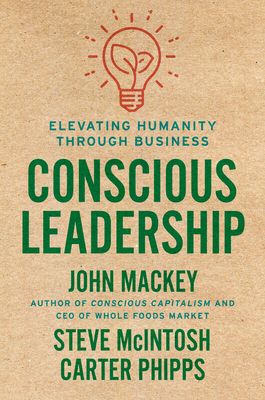
Book Review: Conscious Leadership

Conscious Leadership by John Mackey asks, “What if leadership wasn’t just about profits or power, but about purpose?” John Mackey, co-founder of Whole Foods Market, was a delight to read. As someone who spends a lot of time thinking about leadership, both the practical and the deeply human sides of it, I found this book both challenging and affirming in unexpected ways.

In Conscious Leadership, Mackey builds on the principles of Conscious Capitalism, which he co-authored in 2013, diving deeper into the role of leadership in creating businesses that benefit all stakeholders. His central idea is that leaders have a responsibility to elevate their organizations beyond profit-seeking, emphasizing purpose, people, and personal growth. Mackey outlines ten key characteristics of conscious leaders, such as leading with love, cultivating emotional intelligence, and inspiring others through purpose. If you’re accustomed to leadership frameworks that prioritize efficiency and results, this perspective challenges you to expand your approach.

Mackey reminds us that great leaders don’t just ask “What?” or “How?”; they focus on “Why?”. Purpose creates alignment, fuels innovation, and gives meaning to work. At Whole Foods, their purpose was to “nourish the people and the planet.” As a leader in today’s increasingly conscious business environment, this takeaway felt relevant and urgent. Purpose isn’t an add-on; it’s the foundation!

One of the book’s strengths is its focus on the emotional and relational aspects of leadership. Mackey talks openly about the need to lead with love, which might sound soft to some but proves powerful in practice. Leading with love doesn’t mean avoiding tough decisions; it means approaching people with empathy, care, and respect. If you’ve read books like Daring Greatly by Brené Brown or Radical Candor by Kim Scott, you’ll see some thematic parallels. What stood out for me was Mackey’s ability to connect emotional intelligence to measurable organizational outcomes. Trust and employee engagement are measurable and important.

Mackey’s emphasis on personal growth resonated deeply with me. He argues that conscious leaders must commit to their own evolution, emotionally, intellectually, and spiritually, to effectively lead others. For anyone who has taken on a role that requires vision-setting, this rings true. Your team’s potential can only expand as far as your own willingness to grow. Mackey shares personal stories of his own growth as a leader, missteps included. His vulnerability made the ideas more relatable to me, showing that conscious leadership is a practice, not a destination.

Mackey’s vision of leadership is both aspirational and practical. His stories from Whole Foods provide tangible examples of conscious leadership at work, and I appreciated how he balanced idealism with actionable insights. That said, the book does at times veer into overly utopian territory. While Mackey’s philosophy is inspiring, some leaders may struggle to apply these ideas in organizations that are deeply entrenched in more traditional leadership models. I also found myself curious about other perspectives of this practice outside of Mackey’s own experiences, though the concepts themselves are likely universal.

If you’re a leader looking to redefine success for yourself and your organization, Conscious Leadership is worth your time. It’s especially valuable for those in executive or senior leadership roles where influence can have ripple effects. For me, Mackey’s reflections reinforced the importance of leading with clarity of purpose, concern for people, and the courage to challenge norms. Leadership isn’t just a title, it’s a responsibility to inspire, elevate, and impact.

Vulnerability is a Leadership Discipline

What does it really take to lead well when the outcome is uncertain, the work is highly visible, and failure affects more than just you?

Those are some of the questions I return to whenever I step into something new. Every new opportunity brings energy and possibility, but it also brings exposure and vulnerability. There is no way to fully lead from the sidelines. At some point, you have to enter the arena before you know exactly how things will unfold.

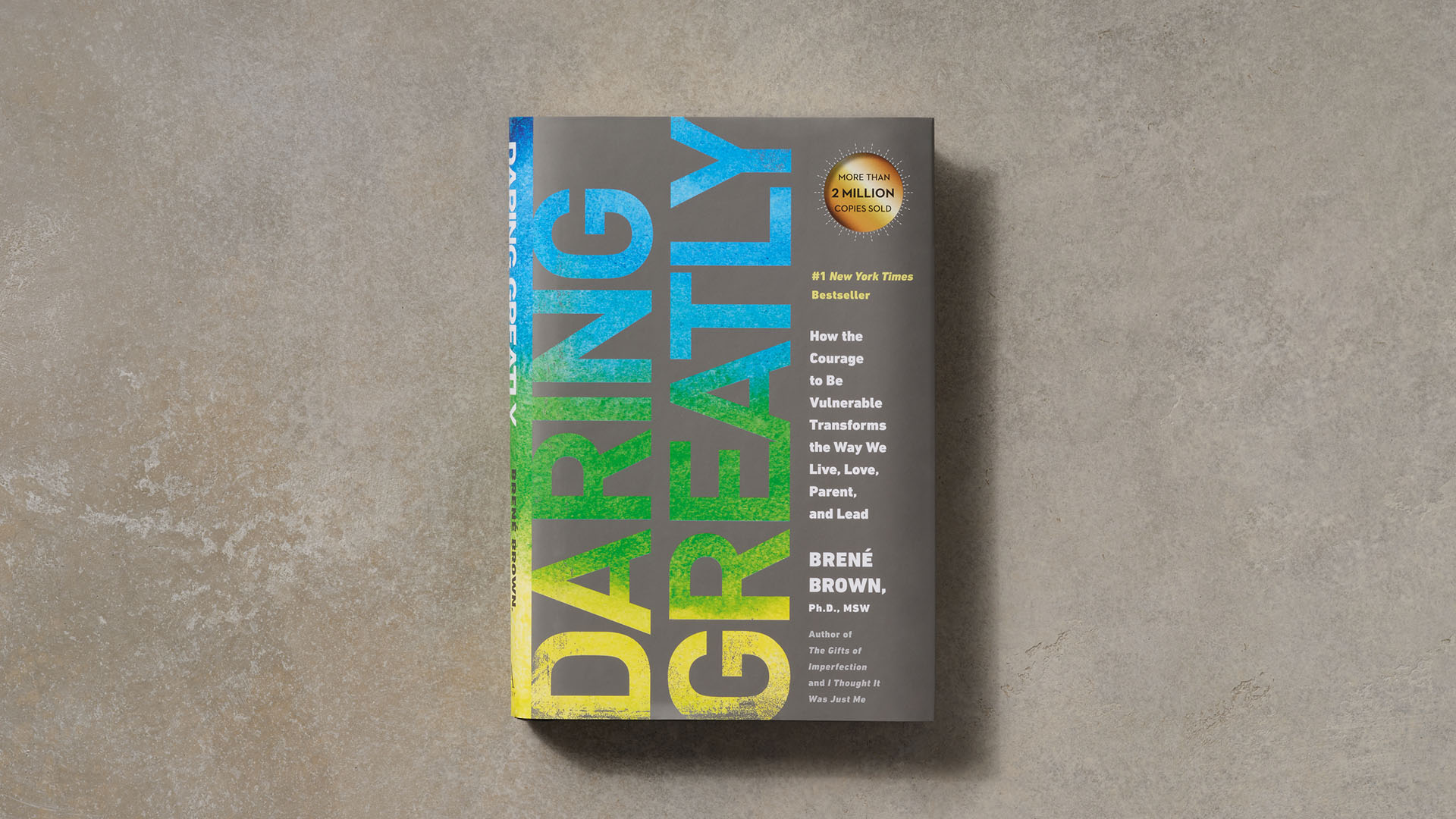
That is why I return to Daring Greatly by Brené Brown at the beginning of every new professional chapter. My first professional mentor gave me a copy when I graduated from our formal mentorship program, and it has stayed with me ever since. I have read it many times, but I revisit it most intentionally when I need a reset. When I stepped into my first executive role, it was one of the first books I picked up again.

What continues to challenge me most about Brown’s work is the idea that vulnerability is not something leaders should outgrow. It is something they have to practice. That still feels counterintuitive at times. Leadership is often associated with certainty, polish, and quick answers. But Daring Greatly argues for something more demanding: the courage to show up fully, take meaningful risks, and stay engaged through the uncertainty, feedback, and discomfort that accompany worthwhile work.

That idea matters because leadership is not only about having a strong point of view. It is also about creating the conditions where others can contribute honestly. In practice, that means naming uncertainty instead of pretending to have every answer. It means asking better questions, inviting dissent, and making room for learning. Teams do not build trust because leaders appear infallible. They build trust when leaders are clear about their values, transparent about tradeoffs, and willing to engage in difficult conversations rather than avoid them.

One of the most practical lessons I have carried forward is this: treat vulnerability as a leadership discipline, not a personality trait.

Like any discipline, it requires intentional practice. Build routines that make candor both safe and useful. Ask what others are seeing that you may be missing. Reward thoughtful risk-taking, not just flawless execution. Address tension while it is still productive, before it grows into dysfunction.

Vulnerability also requires discernment. Not every criticism deserves equal weight. The voices that matter most are not always the loudest; they are the ones willing to step into the arena, engage honestly, and help move the work forward.

For those reasons, Daring Greatly continues to sit close by, both literally and figuratively. I also keep a framed copy of Theodore Roosevelt’s Man in the Arena speech in my office as a reminder of where to focus my attention. It reminds me to value the people who are willing to wrestle with difficult problems, contribute to meaningful work, and keep showing up when the path forward is unclear, while letting go of the judgments of those who choose to remain on the sidelines.

Every time I return to this book, I find myself asking the same question:

Where am I being invited to lead more courageously, not because I have certainty, but because the work matters enough to step into the arena anyway?