Most leadership decisions are evaluated against familiar questions: Will it work? How quickly? What will it cost? What problem does it solve?
But two questions may matter even more: Why are we choosing this? And where might this choice eventually take us?
Those questions sit at the intersection of two books I read last year, Start With Why by Simon Sinek and Farsighted by Steven Johnson.
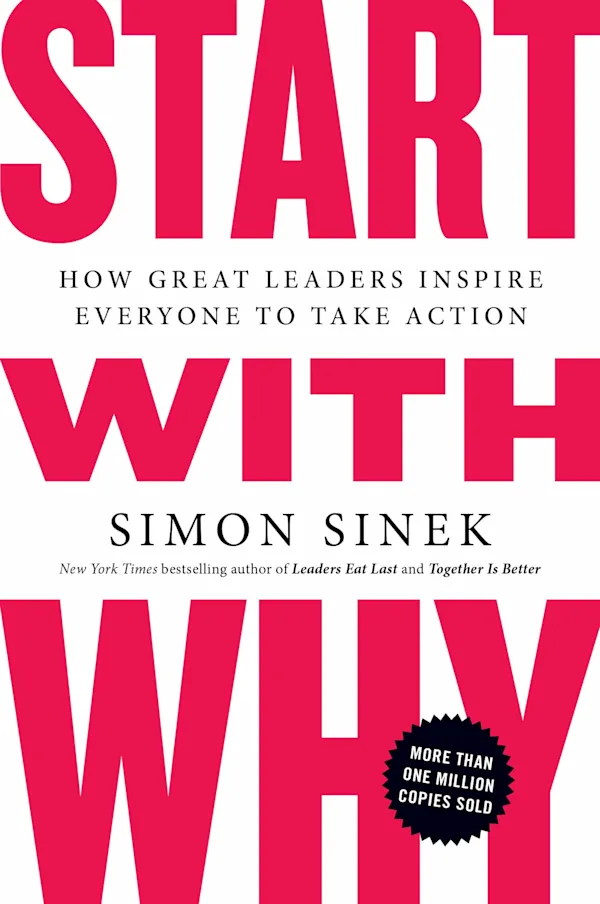

I encountered these books in very different ways. Farsighted came to me through a workplace learning module and immediately challenged how I thought about data-driven decision-making. Data matters, but what does it tell us about the futures our decisions might create? Start With Why kept appearing on recommended reading lists until I finally gave it a listen. I’ve recommended it countless times since. Sinek’s argument is deceptively simple: clarity about why we do something should shape what we choose to do.
Revisiting them together now, I see a connection I missed the first time. Purpose gives us a reason to choose. Foresight forces us to consider what that choice could create. For any of us, a clear purpose can influence:
- What we prioritize
- What we say no to
- Which tradeoffs we’re willing to make
- How we evaluate competing opportunities
As leaders or organizations, if our purpose only appears in presentations and town halls but disappears when difficult choices have to be made, it isn’t really guiding us. It’s just a slogan on the wall. Think about how often you’ve heard, or said, “concern for people” in the workplace. Does that concern still show up when things get crunchy? When deadlines are missed? When quotas are short? When protecting people comes at a real cost? Values are easiest to claim when they aren’t being tested. Purpose becomes visible in the tradeoffs we’re willing to make.
Purpose becomes meaningful when people can see it reflected in the choices leaders make, particularly when those choices are difficult. Shared clarity about what matters gives teams something more useful than a slogan. It gives them a lens for evaluating priorities, tradeoffs, and opportunities. However, simply knowing why we’re making a decision doesn’t necessarily mean we’re making a good one. Leaders can make decisions that are completely consistent with their intentions and still create consequences they never anticipated.
That’s where Johnson’s work comes in. Farsighted thinking adds something important to the conversation. Purpose asks, “Does this choice reflect what matters to us?” Foresight asks, “What happens next?” Johnson encourages us to look beyond the data and lean into more complex decision-making. We have to consider multiple possible outcomes, not just the desired one. We should also seek perspectives and insight from stakeholders who may experience the impact of our decisions differently. Long-term thinking isn’t about predicting the future correctly. It’s about widening the field of possibilities before committing to a path.
That means asking more than whether a decision solves today’s problem:
- What happens next?
- Who experiences the consequences?
- What might we be missing?
- And how would this decision scale?
Consider an organization adopting AI because its purpose includes making work simpler for employees and creating better experiences for customers. The decision may align perfectly with its why. But foresight introduces different questions. Which roles change as adoption scales? What behaviors might the technology unintentionally incentivize? What happens to customer trust? What capabilities will employees need two years from now? The purpose hasn’t changed. But widening the field may change how the organization approaches the decision.
The harder question is what happens when the choice that seems most aligned with our purpose creates undesirable long-term consequences. Or when the most strategically advantageous decision requires compromising something we say matters. A decision can feel deeply aligned with our purpose and still produce unintended long-term consequences. Likewise, the strategically optimal long-term choice can drift away from what we claim to value. Strong leadership requires testing decisions against both our values and our long-term goals.
Purpose without foresight can become conviction without consideration. Foresight without purpose can become strategy without a compass. Effective decision-making requires both: enough clarity about what matters to choose a direction, and enough curiosity to challenge our assumptions about where that direction might lead.
Which brings us back to the questions we started with: Why are we doing this? And where could it take us?
Neither question guarantees the right decision. But together, they force us to move beyond what is easiest, fastest, or most immediately rewarding. Perhaps that’s the real work of leadership: making today’s decisions with both a clear sense of what we stand for and a healthy respect for the future we’re helping create.