Book Review: Chasing Failure by Ryan Leak


I recently had the honor of hearing Ryan Leak speak live at my company’s annual executive leadership conference. His stage presence, authenticity, and comedic delivery had most of us adding one (or in my case, all) of his books to our digital carts before he was even done with his segment. Chasing Failure arrived first, so let’s dig right in! This book opens with a compelling question:

“What would you do if you weren’t afraid to fail?”
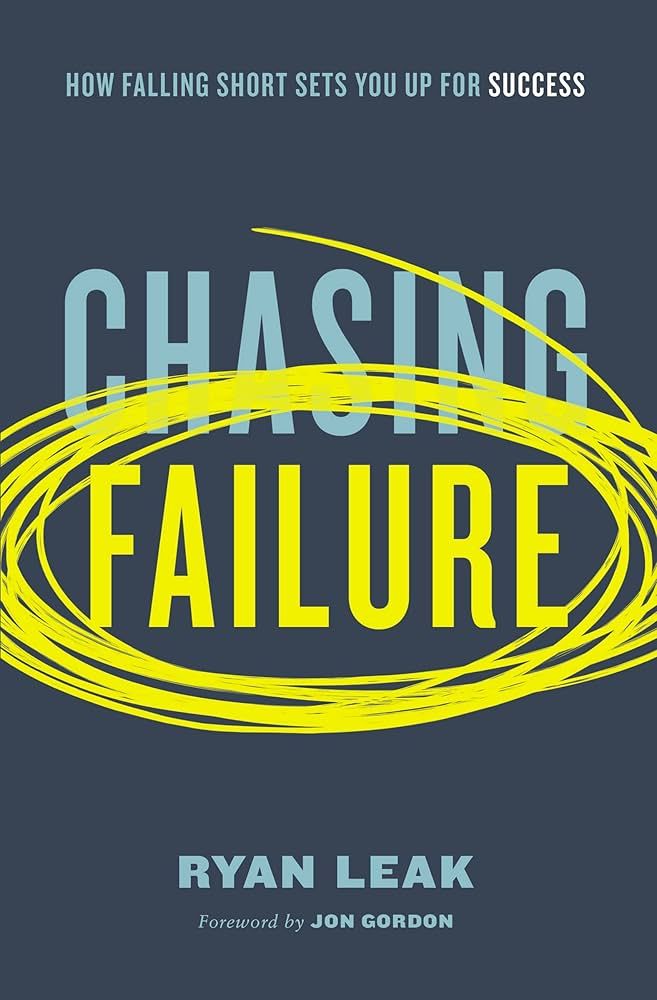
Leak uses Chasing Failure to urge readers to rethink how they approach fear, risk, and ambition. For anyone looking to step outside their comfort zone, this book is a powerful reminder that failure is not the end; it’s often the beginning.

Failure is inevitable and valuable. In Chasing Failure, Leak reframes failure as a necessary step on the path to growth. He shares personal stories and examples of high achievers who embraced failure as a learning tool, challenging readers to do the same.

The book encourages setting bold goals, even when the odds feel stacked against you. Leak’s own journey to try out for an NBA team, despite slim chances, epitomizes the idea of dreaming big.

Resilience is also a major theme of this book.  By shifting the focus from avoiding failure to cultivating resilience, Leak provides a roadmap for achieving sustainable success.

As someone who often juggles high-stakes decisions, Chasing Failure reminded me that perfection isn’t the goal – progress is. Leak’s conversational tone and actionable insights make it a motivating read for anyone ready to redefine their relationship with failure.

Whether you’re charting a new career path or pursuing a personal dream, this book is an inspiring guide to embracing fear, taking risks, and finding purpose in the process.

Next up on my Leak reading list is Leveling Up. Come back to the blog for a review soon! Have you read any books by Ryan Leak? If so, let me know what you think!

Book Review: Radical Candor

I’ve lost count of how many times I’ve read Radical Candor by Kim Scott – well, at least four that I can recall. And every time, it brings something new into focus. It’s one of those rare business books that doesn’t just teach a concept; it challenges you to apply it, refine it, and live it in every leadership interaction.

For those unfamiliar, Radical Candor is built on a deceptively simple idea: great leaders challenge directly while caring personally. Scott maps out a framework that helps leaders strike the right balance between empathy and honesty, making difficult conversations more productive instead of demoralizing. It’s the antidote to the all-too-common traps of ruinous empathy (when you’re too nice to be clear) and obnoxious aggression (when you’re blunt without regard for the person on the receiving end).

This book has been a cornerstone in my own leadership journey. As someone who leads directors and managers, I’ve seen firsthand how easy it is to fall into patterns of avoiding hard truths or delivering them too harshly. Personally, my natural tendency leans toward being too soft, choosing kindness at the expense of clarity. Scott’s mantra, clear is kind, is a powerful reminder that avoiding difficult conversations doesn’t serve anyone in the long run. By softening feedback too much, you might risk leaving people uncertain about what needs to change, which ultimately hinders their growth and performance.

A few key takeaways that stood out to me this (fourth? fifth?) time around:

  • Radical Candor is not a license to be a jerk. There’s a difference between being clear and being cruel. The goal isn’t to be brutally honest but to be constructively direct.
  • Feedback is a gift, not a weapon. When done right, it builds trust instead of eroding it. Creating a culture of feedback takes intention, consistency, and a willingness to model it yourself.
  • Leadership is about relationships, not power. The strongest teams thrive on mutual respect and open dialogue. The best leaders don’t just correct mistakes, they coach people to grow.
  • Balancing kindness with clarity is key. If you naturally lean toward being too empathetic, remember that directness, when delivered with care, isn’t unkind. It’s actually the most respectful thing you can do for your team.

Each time I revisit this book, I gain renewed clarity. I learn more about how I want to show up as a leader, and the type of leadership I hope to inspire in others. It’s the type of read that sticks with you long after you turn the last page, and it’s why I’ll probably find myself picking it up again in the future and why I’ll continue to recommend this book to others.

Have you read Radical Candor? What stood out to you? I’d love to hear how it’s shaped your leadership approach.