Conscious Leadership by John Mackey asks, “What if leadership wasn’t just about profits or power, but about purpose?” John Mackey, co-founder of Whole Foods Market, was a delight to read. As someone who spends a lot of time thinking about leadership, both the practical and the deeply human sides of it, I found this book both challenging and affirming in unexpected ways.
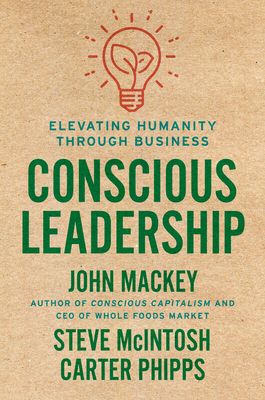
In Conscious Leadership, Mackey builds on the principles of Conscious Capitalism, which he co-authored in 2013, diving deeper into the role of leadership in creating businesses that benefit all stakeholders. His central idea is that leaders have a responsibility to elevate their organizations beyond profit-seeking, emphasizing purpose, people, and personal growth. Mackey outlines ten key characteristics of conscious leaders, such as leading with love, cultivating emotional intelligence, and inspiring others through purpose. If you’re accustomed to leadership frameworks that prioritize efficiency and results, this perspective challenges you to expand your approach.
Mackey reminds us that great leaders don’t just ask “What?” or “How?”; they focus on “Why?”. Purpose creates alignment, fuels innovation, and gives meaning to work. At Whole Foods, their purpose was to “nourish the people and the planet.” As a leader in today’s increasingly conscious business environment, this takeaway felt relevant and urgent. Purpose isn’t an add-on; it’s the foundation!
One of the book’s strengths is its focus on the emotional and relational aspects of leadership. Mackey talks openly about the need to lead with love, which might sound soft to some but proves powerful in practice. Leading with love doesn’t mean avoiding tough decisions; it means approaching people with empathy, care, and respect. If you’ve read books like Daring Greatly by Brené Brown or Radical Candor by Kim Scott, you’ll see some thematic parallels. What stood out for me was Mackey’s ability to connect emotional intelligence to measurable organizational outcomes. Trust and employee engagement are measurable and important.
Mackey’s emphasis on personal growth resonated deeply with me. He argues that conscious leaders must commit to their own evolution, emotionally, intellectually, and spiritually, to effectively lead others. For anyone who has taken on a role that requires vision-setting, this rings true. Your team’s potential can only expand as far as your own willingness to grow. Mackey shares personal stories of his own growth as a leader, missteps included. His vulnerability made the ideas more relatable to me, showing that conscious leadership is a practice, not a destination.
Mackey’s vision of leadership is both aspirational and practical. His stories from Whole Foods provide tangible examples of conscious leadership at work, and I appreciated how he balanced idealism with actionable insights. That said, the book does at times veer into overly utopian territory. While Mackey’s philosophy is inspiring, some leaders may struggle to apply these ideas in organizations that are deeply entrenched in more traditional leadership models. I also found myself curious about other perspectives of this practice outside of Mackey’s own experiences, though the concepts themselves are likely universal.
If you’re a leader looking to redefine success for yourself and your organization, Conscious Leadership is worth your time. It’s especially valuable for those in executive or senior leadership roles where influence can have ripple effects. For me, Mackey’s reflections reinforced the importance of leading with clarity of purpose, concern for people, and the courage to challenge norms. Leadership isn’t just a title, it’s a responsibility to inspire, elevate, and impact.
 Rosemarie L. Cordell