I recently read Joy Buolamwini’s Unmasking AI: My Mission to Protect What Is Human in a World of Machines while on a road trip across Texas and Oklahoma. This book is a thought-provoking exploration of the biases and ethical challenges in artificial intelligence, and the audiobook version is wonderfully narrated by the author herself.
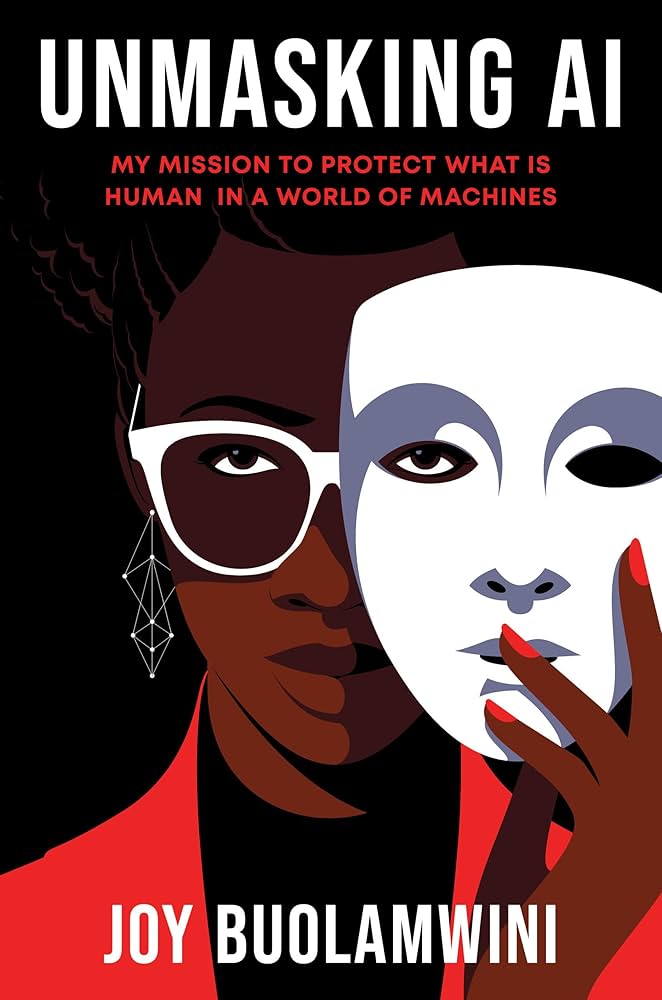
While listening to Joy Buolamwini recount her encounters with biased facial recognition systems, I found myself reflecting deeply on this topic. I thought about how this issue impacts the real world beyond the tech space, whether algorithms might be misidentifying individuals in law enforcement settings or excluding qualified candidates in hiring tools. These considerations weighed heavily on me as I had been preparing for a panel spot at a Women in Tech conference on Generative AI. One of the core topics of the conference was ethical challenges and inherent bias in AI. During the conference panel, I shared how tools like generative AI have tremendous potential, but they are only as good as the data and people behind them. Buolamwini’s stories reminded me that solving bias is not just a technical problem but a moral one. As we embrace AI, we need to amplify uniquely human skills like empathy, ethical reasoning, and creativity.
Buolamwini’s first hand experiences with the Algorithmic Justice League underscore the real-world consequences of biased algorithms, particularly for marginalized communities. Her call for accountability and fairness aligns with the themes I discussed during the conference; how uniquely human skills and ethical considerations remain essential in this AI-enhanced era. The burden of responsibility lies with the companies leveraging AI systems to ensure ethical considerations are met, and bias is minimized.
I use AI tools regularly in my work and personal life. I enjoy the shortcuts it provides but I’m keenly aware of its biases and limitations. For me, the content AI tools generate is merely a starting point for my uniquely-human creative process. To that end, I truly believe AI shouldn’t replace us, rather it should be used as a tool to help us become more efficient. We can use it to offload some of the more mundane tasks, allowing us to focus on the complex work that drives progress.
If Buolamwini’s work teaches us anything, it’s that we all have a role to play in shaping the future of AI. Whether it’s asking critical questions about the tools we use, supporting organizations like the Algorithmic Justice League, or pushing for diverse representation in tech spaces, we can – and must – ensure technology serves everyone, not just a privileged few.
 Rosemarie L. Cordell